Turquoise necklaces and rings in 925 sterling silver
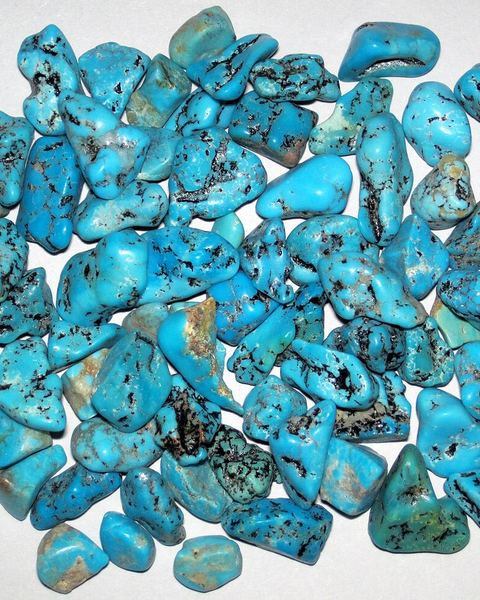
A color from sky blue to green; plain or veined, it looks lovely in silver and suits every age and style.
December birthstone1
Treatment: Turquoise is often treated: it can be dyed, stabilized with epoxy or acrylic resin for durability, and even filled with metal-loaded epoxy to imitate pyrite. Frequently cited imitations are dyed howlite and magnesite (Wikipedia).1,2 Each listing states the treatment of that piece separately.

In tradition
Its name comes from the Old French pierre turquoise, “Turkish stone”. The stone was mined in Iran, not Türkiye; it is generally held to have been named for the Turkish lands through which it reached Europe.2,6,7
The Turkish firuze is traced to the Iranian pērōzah, “victory”, which became fayrūzah in Arabic and fīrūzeh in modern Persian.2
The finest color traditionally comes from the Nishapur district of Iran; the trade calls that color “Persian blue” wherever the stone was mined. Nishapur has produced turquoise for more than a thousand years.1,3
Turquoise is among the world's oldest ornamental stones: turquoise jewelry from ancient Egyptian tombs is among the oldest known, and Chinese artisans were carving it over 3,000 years ago.1,2,4
Tutankhamun's gold burial mask is inlaid with turquoise, among other stones. In European tradition a gift of a turquoise ring meant “forget me not”.1,2
Pieces with this stone
There is no piece with this stone on the site right now. Write to us if you would like a piece with this stone. Get notified when new pieces arrive.