Tiger eye necklaces and rings in 925 sterling silver
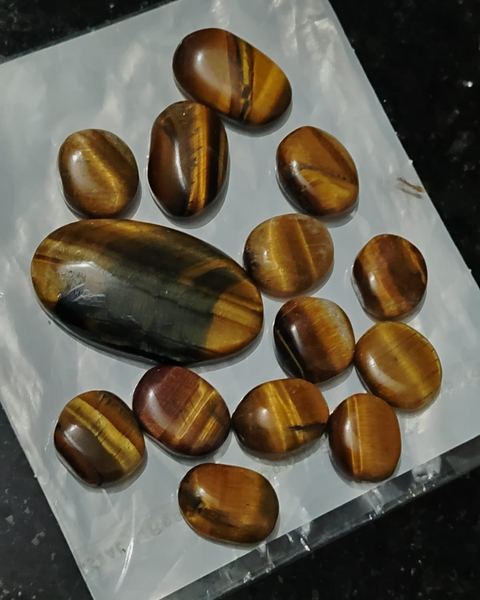
Gold and brown bands that shift in the light. It suits women and men alike and goes well with brown and khaki.
Treatment: Its usual color is amber to brown; red, blue and green tiger eye is usually produced by heat treatment or dye.1,2 Each listing states the treatment of that piece separately.

In tradition
Its chatoyant sheen comes from a parallel fiber structure formed as crocidolite fibers are replaced by silica, which is why it is best cut as a cabochon.1
A 2003 study found that crocidolite fibers were not fully replaced by quartz but remain enclosed in it, formed by crack-seal crystallization.2
Pieces with this stone
There is no piece with this stone on the site right now. Write to us if you would like a piece with this stone. Get notified when new pieces arrive.