Coral necklaces and rings in 925 sterling silver
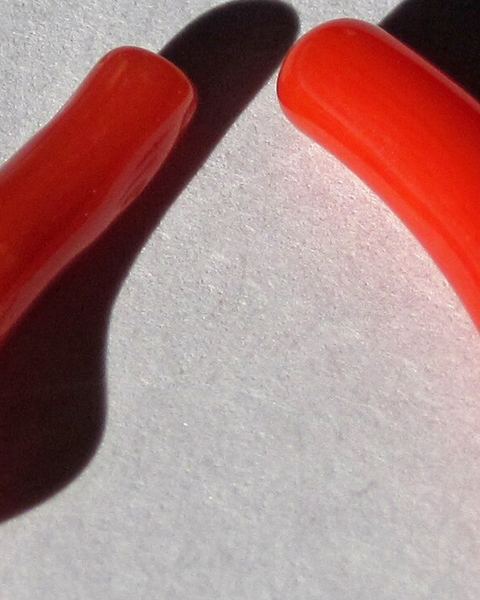
A warm, softly glowing pink to red that adds a lively touch beside silver. It suits anyone who likes a color that brightens the face.
Treatment: Dyeing and bleaching are common treatments for coral, and deep reds in particular may be dyed. Impregnation and surface coatings also occur. Plastic and lab-created (Gilson-type) imitations exist on the market. A piece's coral species and source are not known unless stated separately in its listing.1,2 Each listing states the treatment of that piece separately.

In tradition
Turkish mercan comes from Arabic marjān; per Wiktionary the Arabic word comes from Classical Syriac margān (“pearl-like”).5,6
Coral has been used as a gem since before recorded history: the ancient Greeks and Romans used red, pink and white coral widely, and coral jewelry has also been found in ancient Egyptian and prehistoric European burials.1,3
Working Mediterranean coral long centered on Italy; the town of Torre del Greco near Naples became one of the centers of coral craft after 1805.1,3
Today precious coral is protected and regulated: harvest is restricted in most countries, some Corallium species are on the CITES Appendix III list, and intensive fishing has thinned shallow Mediterranean colonies. New, documented coral is therefore scarce, and dyed or imitation material is common on the market.1,3,7
Pieces with this stone
There is no piece with this stone on the site right now. Write to us if you would like a piece with this stone. Get notified when new pieces arrive.
About the stone: color, hardness and care
Care
- Water
- It is very soft; wipe it with a soft cloth and rinse briefly in warm soapy water. Do not soak it or put it in an ultrasonic cleaner or jewelry dip.2,4
- Perfume and lotion
- Put on perfume and makeup first, then the jewelry. Because it is mostly calcium carbonate, keep it away from acids such as vinegar.2,4
- Heat
- Dyed coral's color may fade over time; keep it away from heat and solvents.1